

The Whittington Hospital NHS Trust Charitable  Funds

David's story

David Ross

David Ross

My Story

I’m running the London Marathon to raise money for the Whittington NHS Hospital — because without them, I wouldn’t be here today.

Every pound donated will support the life-saving work they do every day, which you can read more about here. Thank you for your support – it means the world to me.

Here’s my story:

In March 2025, I returned home to London from a work trip to India seriously unwell with pneumonia in both lungs. Over the next few days, I deteriorated rapidly. My body went into septic shock — a life-threatening condition where the immune system goes into overdrive, blood pressure collapses, and organs begin to fail.

I was incredibly lucky that my brother-in-law, an NHS doctor who knew the signs of sepsis was staying with us, and insisted I went to our local hospital, the Whittington in North London. By the time I arrived at A&E I was in and out of consciousness, had a blood pressure too low to be read on the standard machines, and if untreated, was less than 24hrs from death. It sounds dramatic (and it was!) but it felt blurred, like I was fading away with a dimmer switch going down on all my senses.

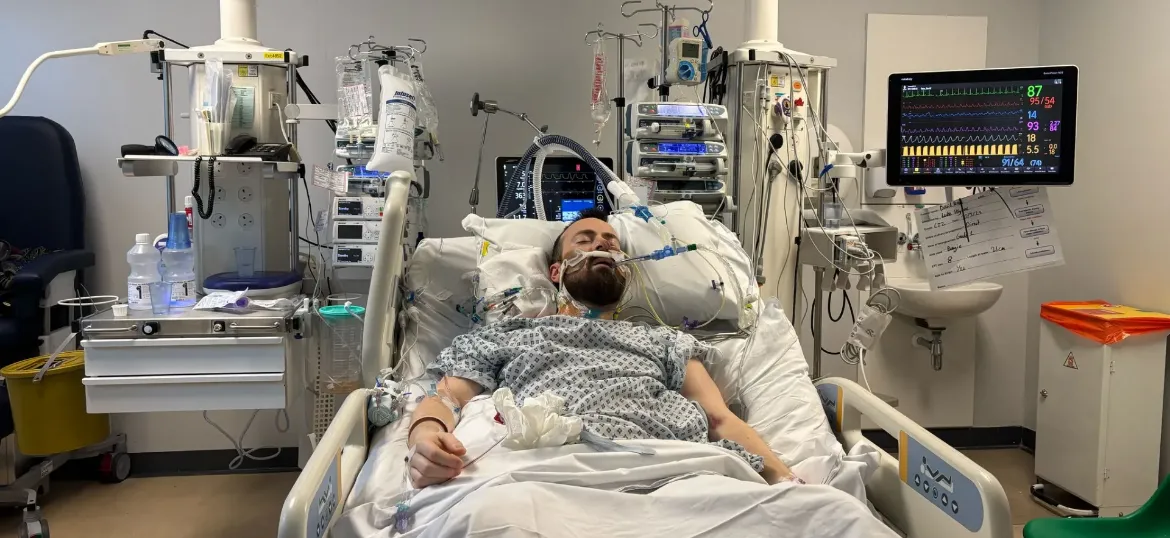
The triage in A&E was quick - due to the severity of my illness I was transferred to intensive care to be sedated and put on a ventilator. I had 11 different lines and cables put into me – including a feeding tube, breathing tubes, and lines stitched into my body for antibiotics and steroids to be pumped in. The speed was head spinning - an hour earlier I’d been home in bed, and now I was being cut out of my clothes, about to be put under, and advised by the doctor to make a goodbye video on my phone in case I didn’t wake up.

Despite the aggressive treatment I continued to deteriorate through my first night in hospital - and my partner who was 37 weeks pregnant was told that there was only a 50% chance I’d survive. And If I did make it, she needed an alternative birth plan as I’d likely still be in hospital for a long time.

Three days later, thanks to the care of many people, I woke up - alive but with a hard road of recovery ahead of me. Lungs at 20% of their capacity, barely able to walk, and many more days to recover in hospital needed. The time conscious in ICU was brutal - the pain from the needles and wires, the constant beeping of the machines, while watching the clock waiting for ward rounds, hoping a feeding tube will be removed or a line taken out of somewhere to be a bit more comfortable.

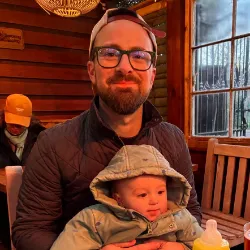
This sounds like a sad story, but it isn’t. When you’re at your lowest the smallest acts of kindness make a big difference, like someone bringing you a glass of water, or helping wipe your face, or just sitting to talk. My family, friends, and colleagues were all amazing. And most of all, the staff at the Whittington - I’ll never forget the care and the kindness they gave. As well as saving my life - they helped bring a new one into the world - a week and a half after leaving hospital I was back at the Whittington for the birth of my baby boy Ari.

When I left hospital I couldn’t walk across a room without getting out of breath - and as part of my rehabilitation I started doing couch to 5k in June. To begin with even a 1 minute run was exhausting. But I kept going and going - and on April 26th I’m going to try and go from ventilator in ICU to marathon runner in 1 year. I’m doing this to fundraise - because our NHS is under pressure and I want to do what I can to help - and also for my baby boy. Because when he grows up, I want him to know that although you can’t stop bad things happening to you, you can still try and turn them into something good.

Thank you for reading, and thank you for supporting.
124%

Funded

  • Target
    £2,750
  • Raised so far
    £3,404
  • Number of donors
    83

My Story

I’m running the London Marathon to raise money for the Whittington NHS Hospital — because without them, I wouldn’t be here today.

Every pound donated will support the life-saving work they do every day, which you can read more about here. Thank you for your support – it means the world to me.

Here’s my story:

In March 2025, I returned home to London from a work trip to India seriously unwell with pneumonia in both lungs. Over the next few days, I deteriorated rapidly. My body went into septic shock — a life-threatening condition where the immune system goes into overdrive, blood pressure collapses, and organs begin to fail.

I was incredibly lucky that my brother-in-law, an NHS doctor who knew the signs of sepsis was staying with us, and insisted I went to our local hospital, the Whittington in North London. By the time I arrived at A&E I was in and out of consciousness, had a blood pressure too low to be read on the standard machines, and if untreated, was less than 24hrs from death. It sounds dramatic (and it was!) but it felt blurred, like I was fading away with a dimmer switch going down on all my senses.

The triage in A&E was quick - due to the severity of my illness I was transferred to intensive care to be sedated and put on a ventilator. I had 11 different lines and cables put into me – including a feeding tube, breathing tubes, and lines stitched into my body for antibiotics and steroids to be pumped in. The speed was head spinning - an hour earlier I’d been home in bed, and now I was being cut out of my clothes, about to be put under, and advised by the doctor to make a goodbye video on my phone in case I didn’t wake up.

Despite the aggressive treatment I continued to deteriorate through my first night in hospital - and my partner who was 37 weeks pregnant was told that there was only a 50% chance I’d survive. And If I did make it, she needed an alternative birth plan as I’d likely still be in hospital for a long time.

Three days later, thanks to the care of many people, I woke up - alive but with a hard road of recovery ahead of me. Lungs at 20% of their capacity, barely able to walk, and many more days to recover in hospital needed. The time conscious in ICU was brutal - the pain from the needles and wires, the constant beeping of the machines, while watching the clock waiting for ward rounds, hoping a feeding tube will be removed or a line taken out of somewhere to be a bit more comfortable.

This sounds like a sad story, but it isn’t. When you’re at your lowest the smallest acts of kindness make a big difference, like someone bringing you a glass of water, or helping wipe your face, or just sitting to talk. My family, friends, and colleagues were all amazing. And most of all, the staff at the Whittington - I’ll never forget the care and the kindness they gave. As well as saving my life - they helped bring a new one into the world - a week and a half after leaving hospital I was back at the Whittington for the birth of my baby boy Ari.

When I left hospital I couldn’t walk across a room without getting out of breath - and as part of my rehabilitation I started doing couch to 5k in June. To begin with even a 1 minute run was exhausting. But I kept going and going - and on April 26th I’m going to try and go from ventilator in ICU to marathon runner in 1 year. I’m doing this to fundraise - because our NHS is under pressure and I want to do what I can to help - and also for my baby boy. Because when he grows up, I want him to know that although you can’t stop bad things happening to you, you can still try and turn them into something good.

Thank you for reading, and thank you for supporting.