Running for Charlotte: 32 Half Marathons to the London Marathon, in memory of my sister
Dom Robinson
My Story
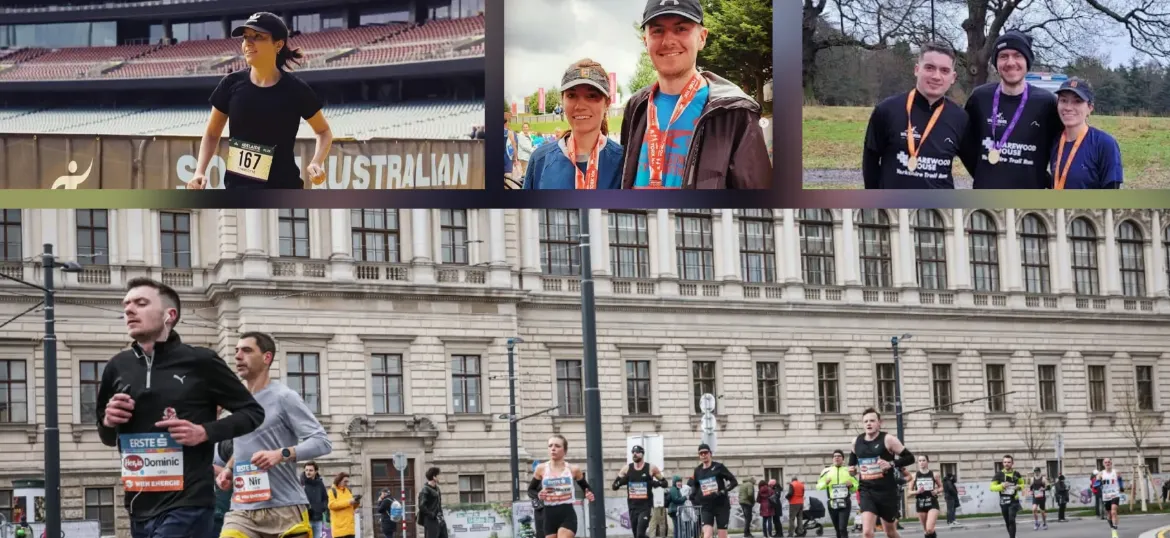
Since I first got into running a decade ago, the London Marathon has always felt like a distant dream. But it wasn’t just my dream—it was something my sister Charlotte and I hoped to do together. We even booked hotel rooms in London several times on the off chance we’d get in through the ballot, but we were never that lucky. Now, in 2026, I’ll be running it for the first time—and I never imagined I’d be doing it in memory of Charlotte, rather than beside her.
In December 2023, we lost Charlotte after she faced a mental health crisis that we now firmly believe was body dysmorphic disorder (BDD). There were no warning signs in the months leading up to it, and she had no history of mental illness. Charlotte was a private person, but fiercely determined—she ran four marathons, moved to Australia on her own for several years, and excelled in every job she took across multiple industries. I saw her as a role model. No one who knew her could, or still can, comprehend that beneath her strength and success, she felt so deeply out of control.
BDD is a disorder marked by obsessive worry over perceived flaws in one’s appearance. These concerns may be invisible to others, but the emotional distress is very real—often manifesting as anxiety, shame, depression, and disgust. It can severely affect relationships, work, and social life, and frequently leads to avoidance, isolation, and suicidal thoughts. Studies show that around 25% of people with BDD attending specialist clinics have attempted suicide, and approximately 0.3% die by suicide each year.
What makes BDD especially devastating is that sufferers rarely speak about it. The last thing someone with BDD wants is to draw attention to the very thing they obsess over. This silence makes it incredibly difficult for loved ones to help—especially when many have never heard of BDD or mistakenly believe it’s simply about vanity. As a family who loved Charlotte deeply, we carry immense guilt, sadness, and anger that we weren’t called upon to help. That pain will never leave us.
So why am I sharing this? Like Charlotte, I’ve kept my grief quiet, believing that staying strong meant carrying on as if I were fine. But that’s not what strength looks like—and it won’t protect other families from experiencing the same heartbreak. I didn’t know what BDD was before Charlotte died. Now, I want to use this painful experience to raise awareness and help others recognise the risks. Shortly after her passing, I was introduced to the BDD Foundation, who do incredible work to raise awareness and fund treatment for those suffering. You can learn more about them at the bottom of this page.
The BDD Foundation has kindly offered me a place in the London Marathon, and I’m determined to raise as much money as I can for this vital cause. In the lead-up to the race on Sunday 26th April, I’ll be running 32 half marathons in 32 weeks, starting the week of 1st September—one for each year of Charlotte’s life.
It would mean the world to me if you could donate, no matter how much, to support this meaningful cause.
Thank you.
About BDD
Body dysmorphic disorder (BDD) is an anxiety disorder closely related to OCD. It causes individuals to perceive their appearance in a distorted and overwhelmingly negative way. BDD is not about vanity—it’s a serious mental health condition that leads to persistent, intrusive thoughts and significant emotional distress.
BDD affects around 1 in 50 people, yet it remains widely misunderstood and underdiagnosed. Many sufferers are misdiagnosed with depression or social anxiety and go 10–15 years before receiving the correct treatment.
This must change. BDD is linked to alarmingly high rates of suicidal ideation, suicide attempts, psychiatric hospitalisation, unemployment, eating disorders, and substance misuse. Greater awareness, understanding, and access to treatment are urgently needed.
-
Target
£2,500
-
Raised so far
£2,825
-
Number of donors
96
My Story
Since I first got into running a decade ago, the London Marathon has always felt like a distant dream. But it wasn’t just my dream—it was something my sister Charlotte and I hoped to do together. We even booked hotel rooms in London several times on the off chance we’d get in through the ballot, but we were never that lucky. Now, in 2026, I’ll be running it for the first time—and I never imagined I’d be doing it in memory of Charlotte, rather than beside her.
In December 2023, we lost Charlotte after she faced a mental health crisis that we now firmly believe was body dysmorphic disorder (BDD). There were no warning signs in the months leading up to it, and she had no history of mental illness. Charlotte was a private person, but fiercely determined—she ran four marathons, moved to Australia on her own for several years, and excelled in every job she took across multiple industries. I saw her as a role model. No one who knew her could, or still can, comprehend that beneath her strength and success, she felt so deeply out of control.
BDD is a disorder marked by obsessive worry over perceived flaws in one’s appearance. These concerns may be invisible to others, but the emotional distress is very real—often manifesting as anxiety, shame, depression, and disgust. It can severely affect relationships, work, and social life, and frequently leads to avoidance, isolation, and suicidal thoughts. Studies show that around 25% of people with BDD attending specialist clinics have attempted suicide, and approximately 0.3% die by suicide each year.
What makes BDD especially devastating is that sufferers rarely speak about it. The last thing someone with BDD wants is to draw attention to the very thing they obsess over. This silence makes it incredibly difficult for loved ones to help—especially when many have never heard of BDD or mistakenly believe it’s simply about vanity. As a family who loved Charlotte deeply, we carry immense guilt, sadness, and anger that we weren’t called upon to help. That pain will never leave us.
So why am I sharing this? Like Charlotte, I’ve kept my grief quiet, believing that staying strong meant carrying on as if I were fine. But that’s not what strength looks like—and it won’t protect other families from experiencing the same heartbreak. I didn’t know what BDD was before Charlotte died. Now, I want to use this painful experience to raise awareness and help others recognise the risks. Shortly after her passing, I was introduced to the BDD Foundation, who do incredible work to raise awareness and fund treatment for those suffering. You can learn more about them at the bottom of this page.
The BDD Foundation has kindly offered me a place in the London Marathon, and I’m determined to raise as much money as I can for this vital cause. In the lead-up to the race on Sunday 26th April, I’ll be running 32 half marathons in 32 weeks, starting the week of 1st September—one for each year of Charlotte’s life.
It would mean the world to me if you could donate, no matter how much, to support this meaningful cause.
Thank you.
About BDD
Body dysmorphic disorder (BDD) is an anxiety disorder closely related to OCD. It causes individuals to perceive their appearance in a distorted and overwhelmingly negative way. BDD is not about vanity—it’s a serious mental health condition that leads to persistent, intrusive thoughts and significant emotional distress.
BDD affects around 1 in 50 people, yet it remains widely misunderstood and underdiagnosed. Many sufferers are misdiagnosed with depression or social anxiety and go 10–15 years before receiving the correct treatment.
This must change. BDD is linked to alarmingly high rates of suicidal ideation, suicide attempts, psychiatric hospitalisation, unemployment, eating disorders, and substance misuse. Greater awareness, understanding, and access to treatment are urgently needed.